Bathrooms combine water, steam, and electricity. Bedrooms combine microphones and the temptation to score a night's sleep. Both rooms attract products that sound medical and are not, or that sound waterproof and are only splash-resistant. This guide is a boundary. It is not medical advice, not a plumbing code, and not a product ranking.
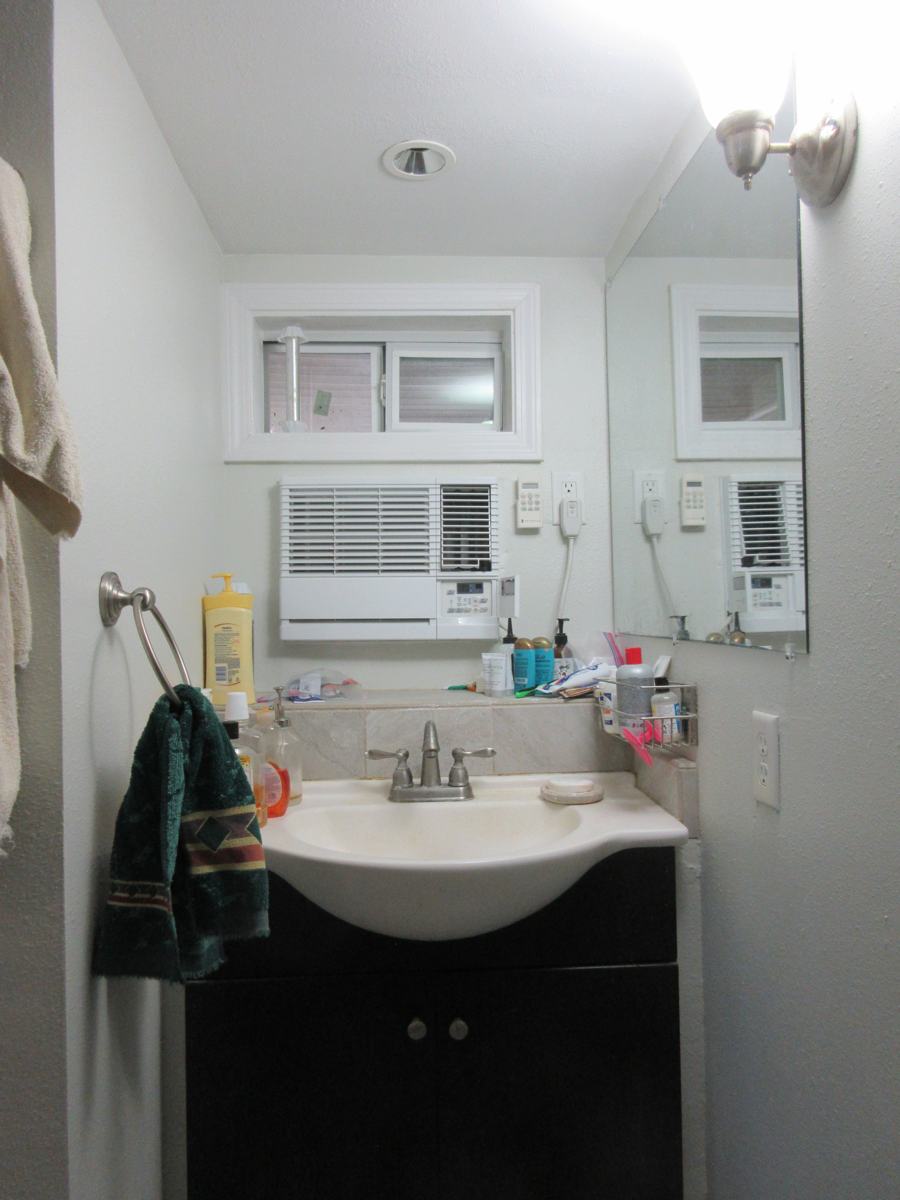
The photo is an ordinary sink, so the page does not pretend a gadget is the room. Older posts, including Top 10 Smart Bathroom Products, bathroom trends, and Can Google Home help you track your sleep?, stay as they were published. The sleep article is a historical look at a feature, not a clinical validation.
Water leaks and whole-home shutoff are in the climate guide. Family consent and bedroom cameras are in the family guide. Anything you would plug in is in the plugs guide for load ratings.
Fixture, tracker, or alarm
| You want | Reasonable approach | Do not substitute | Why |
|---|---|---|---|
| A shower that stays comfortable | A valve you can set by hand. A smart valve only if it fails to a temperature you can stand and you can override it | An app as the only temperature control | A bug should not be a scald |
| Less steam on the mirror | A fan that actually vents outside, on a switch or a humidity control rated for the room | A gadget that only logs humidity | Logging is not ventilation |
| Warning of a leak | A leak sensor plus a shutoff you can reach, covered in the climate guide | A sensor with nowhere for the alert to go | Water does not wait for a notification you muted |
| A toilet seat or bidet | A model installed as the maker says, with GFCI protection where required, and a way to use the toilet if the seat fails | A casual smart plug on a bidet | Water and a random relay are a bad pair. Follow the electrical rules for wet rooms |
| Sleep information | A tracker you can stop wearing, plus the habit you meant to change | A diagnosis, a medication change, or a screen that makes you more anxious at midnight | We did not validate any sleep score against a lab |
| Air in the bedroom | A certified CO alarm if the room or the home needs one, plus ventilation | An uncertified "air quality" puck as the CO alarm | Certification and placement come from the alarm maker and local rules |
| Light at night | A dim path light or a switch you can find | A bright overhead on a motion sensor that blinds you | Bathrooms at 2 a.m. need a little light, not a spotlight |
Scales that estimate body composition show you a trend from their method. They are not a medical body-composition test. If a number would change a health decision, talk to a clinician and use the measurement they trust. We will not interpret a scale.
Compatibility and limits
- Wet locations. A product's IP or wet-location rating is the manufacturer's statement about water, not a suggestion. A speaker rated for a shelf is not a speaker for inside a shower. A switch for a bathroom has to be a bathroom-legal installation where you live. This guide will not tell you to rewire a wet room. If you are not qualified, hire someone who is.
- GFCI and heat. Bath fans, heated floors, and bidet seats have electrical requirements. A smart relay does not replace a protective device the code or the manual calls for. Do not put a heated product on an unrated plug behind a cabinet.
- Voice in the bathroom. A smart speaker in a bathroom hears whatever happens there. Many people will not want that. If you do, mute it when guests are in. Do not put a camera in a bathroom. The family guide says the same thing and it is not optional.
- Sleep tracking and assistants. Google's older feature set for sleep, which our existing article discusses, is not the same thing as Gemini for Home. Gemini for Home is an opt-in described in the Google Home guide. A speaker near a bed is a microphone near a bed. A phone on a nightstand can track motion or sound only if you turn that on and accept the privacy trade. None of these are a sleep study.
- Matter. Bath fans, leak sensors, and some plugs may show up in Matter controllers over time. On November 10, 2026 the Alliance listed Matter 1.6.1 documents, and Matter 1.6 (June 17, 2026) still comes with per-company timelines. A logo does not make a fan vent to the outdoors. Look at the duct, not the app.
- Health data accounts. A scale or a tracker that uploads weight, heart rate, or sleep creates a health-adjacent record. Read who else can see it, whether it can be deleted, and whether a family sharing toggle is on by default. We did not audit each vendor. You should read the policy of the one you buy.
- Accessibility. A toilet or a shower control that only works through a phone fails the person who cannot use the phone that day. Keep a manual flush, a manual valve, and a light switch. The family guide covers reach and vision more broadly.
Setup, and what fails
- Fix ventilation and leaks with ordinary hardware before you add accounts. A fan that dumps steam into the attic is a building problem.
- Find the water shutoff for the sink, the toilet, and the house. A smart sensor without that knowledge is a pager.
- If you install a bidet seat or a similar product, follow the manufacturer's electrical and water instructions, including any GFCI requirement. If that is outside your skills, hire a plumber or an electrician as appropriate.
- For a leak sensor, test the alert with a damp touch, then dry the sensor so it does not sit in a puddle and corrode.
- For a sleep tracker, wear or place it for a few nights before you change anything else, so you know what the number does on a normal week. Do not start a stack of supplements or a medical change because an app changed color. Talk to a clinician for medical changes.
- Put night lighting on a path that does not shine in a sleeping person's eyes. A motion light with a short timeout and a low level is a setting. Test it once in the dark.
- Keep the bathroom speaker, if any, out of the shower spray and off the guest default.
Failures:
- Steam kills an indoor smart display that someone perched on the tank. The rating was not decorative.
- A "smart" shower that loses Wi-Fi and stays at the last temperature. Know how to cut hot water.
- A sleep score that drops because the phone was charging in another room. The score followed the phone, not the person. Read what the sensor actually measured.
- A scale that needs a body mass entered before it will show weight, and then will not work for a second person. Read the sharing model before you put it in a shared bathroom.
- A muted leak alert. Check the phone's notification settings the day you install the sensor, not the day of the leak.
What it costs to own
No prices and no sleep-score benchmarks.
- Bathroom electrics and plumbing, done wrong, cost more than the gadget. Pay for a qualified installer when the manual or the local rules call for one.
- Sensors need batteries. Fans need cleaning. A tracker needs a strap or a subscription if the vendor locked history behind one. Read the renewal.
- A sleep gadget that makes you watch the clock can cost you sleep. That is a reason to turn the morning number off, which is free.
- We will not quote a health saving, a premium discount, or a water-use reduction. Those depend on your installer, your utility, and your body. None of them were measured here.
Privacy, security, and a manual fallback
- No cameras in bathrooms. No hidden microphones. A speaker, if you want one, is visible and muteable.
- Health accounts get unique passwords and two-factor authentication. Do not use a family login for a tracker that stores someone's weight or cycle or sleep.
- Delete data when you sell a scale or a tracker. Reset it. If it cannot be reset, do not sell it.
- Guest mode means the guest is not on camera and not on your health profile.
- Bedroom microphones for "sleep tracking" should be something the sleeper turned on. A smart display's mics are not a neutral nightstand object.
Manual fallback:
- Flush, faucet, fan, and light work with the router off.
- A hot-water cutoff you have used once, so it is not theoretical.
- Certified smoke and CO alarms outside the app.
- A lamp or a night light that is just a bulb.
- If a tracker fails, you still go to bed. The device is optional. The alarms are not.
How to read the older articles
Bathroom lists, bidet reviews, sleep posts, and air or fitness posts sit in the directory. Some discuss specific seats and some discuss Google's sleep features as they existed then. Read them as archive. Do not follow an installation shortcut that skips GFCI, a shutoff, or a ventilation duct. Do not treat a sleep-score screenshot in an old post as evidence. We did not reproduce any of those tests for this guide, and many of those posts were never clinical tests to begin with.
Frequently asked questions
Are smart scales accurate?
They are consistent enough for some people to watch a trend, and they are not a medical measurement. Different scales and different methods disagree. If a number would change your care, use a clinician's method. We did not calibrate a scale.
Can a smart speaker track my sleep?
Some platforms have offered features that infer sleep from motion or sound. Our older Google article describes one such idea from its own date. Any such feature is optional, it is not a sleep study, and a speaker in the bedroom is a microphone. Read the current help page before you enable it.
Is a humidity sensor the same as a bathroom fan?
No. A sensor can tell you the air is damp. A fan, ducted correctly, removes moisture. Buy the fan if the mirror is wet. A graph will not dry the wall.
Can I put a smart plug on a bidet seat or a space heater in the bathroom?
Do not improvise. Follow the fixture's electrical instructions and the plug's rating, and use a qualified installer when the work is in a wet room. The plugs guide explains load ratings for ordinary appliances. A bathroom is the strict case, not the loose one.
Does Matter make a bathroom fan safer?
No. Safety is the wiring, the vent path, and the ratings. Matter might, on some future controller, switch a fan that supports it. Matter 1.6.1 documents on the Alliance site as of November 10, 2026 are not a vent.
Do you recommend a sleep tracker?
We do not recommend one as a health device. If you want the number and you can ignore it when it is nonsense, that is a personal choice. If the number would worry you into worse sleep or into a medical decision, leave it. Talk to a clinician for sleep disorders. This page cannot assess them.
Sources
Checked November 10, 2026.
- Connectivity Standards Alliance, June 17, 2026, Matter 1.6 and per-company timelines: announcement.
- Alliance specification downloads, November 10, 2026, listing Matter 1.6.1 documents: downloads.
- Google Nest Help, for the current scope of Gemini for Home, which is not a sleep-lab claim: Gemini for Home.
- The manual for any wet-room fixture you install, and the placement instructions for a certified CO or smoke alarm, outrank this page.
Articles already on this site
These pages were already on Smart Homes Reviews before this guide. They keep their original wording. Read them as a library of earlier articles, not as new tests or a current ranking.
Posts in this topic
- How to Choose an Accurate Toilet Seat Riser?
- The Appeal Of The Bidet – TOTO Smart Toilet
- Automatic Soap Dispensers For Your Smart Homes
- Bathroom Trends 2020 / 2021
- Top 10 Best Bidets 2020
- Bio Bidet BB-600 Review
- How To Buy A Cedar Barrel Sauna?
- Can Google Home Help You Track Your Sleep?
- Can the TOTO Toilet Seat Help With Hemorrhoids?
- How To Choose An Accurate Toilet Seat Riser?
- GASON S4 Body Fat Scales Review
- Getting to Know Eargo 5
- Getting to Know the Best Smart Scales on the Market
- Is it Worth it to Buy Amazon Halo?
- Rebirth PRO Cedar Barrel Sauna Review
- Should You Buy Smart Dumbbells?
- Smart Mirrors That Will Change Your Life Forever
- Top 20 Adjustable Massage Bed with Folding Bed Frame
- Top 10 Best In-Home Saunas 2020
- Top 10 Home Gym Products
- Top 10 Smart Bathroom Products
- Top 10 Smart Health Products
- TOTO Washlet C100 Elongated Bidet Toilet Seat Review
- What Is A DIY Sauna Kit?
- What Is A Sauna Suit?
Category archives
- Smart Appliances
- Smart Bathroom
- Smart Garden & Outdoor
- Smart Health, Baby & Family
- Smart Home Starter Kits